

Introduction
You sit down to work. Coffee? OK. Laptop? Open, What’s the point? In limbo between missing and on vacation and you’re thinking about how to stay focused at work without falling into some rigid routine.
Sound familiar? Welcome to modern work life where notifications are like mosquitoes and meetings are like jump scares. Staying focused at work is harder than ever, but the people who consistently get meaningful work done aren’t superhuman—they just use better systems.
I’ve tried dozens of focus strategies over the years, from the strict time blocking to putting my phone in another room like it owed me money. The reality is simple: focus is not something you have or don’t have—it is a skill you build.
This guide will teach you how to stay focused at work with seven practical methods that actually work on a busy day – no extreme routines or perfect discipline required.
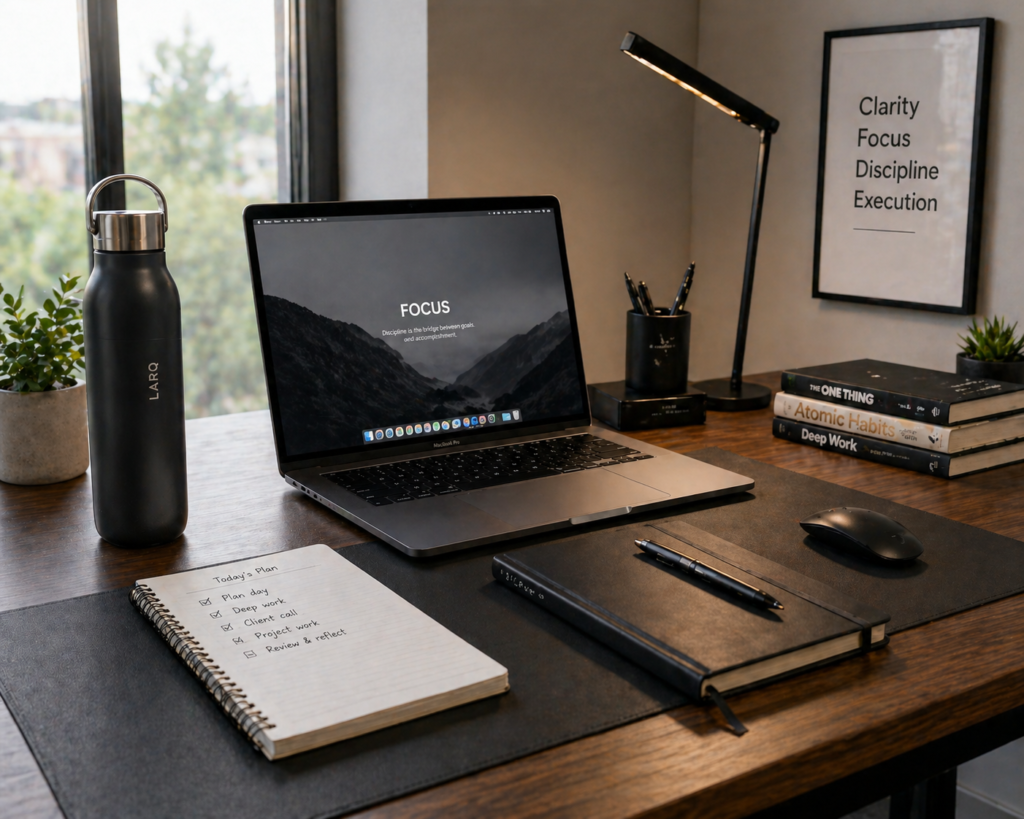
Why Focus at Work Feels So Hard Today
Before fixing focus, it helps to know what steals it.
Common reasons people struggle to improve focus at work:
- Constant notifications
- Multitasking overload
- Stress and anxiety
- Poor sleep
- Too many meetings
- Open-office noise
- Working from home distractions
- Unclear priorities
- Phone checking habits
- Burnout
Think of your attention like battery life. If ten apps run in the background, performance drops fast.
7 Practical Techniques to Stay Focused at Work
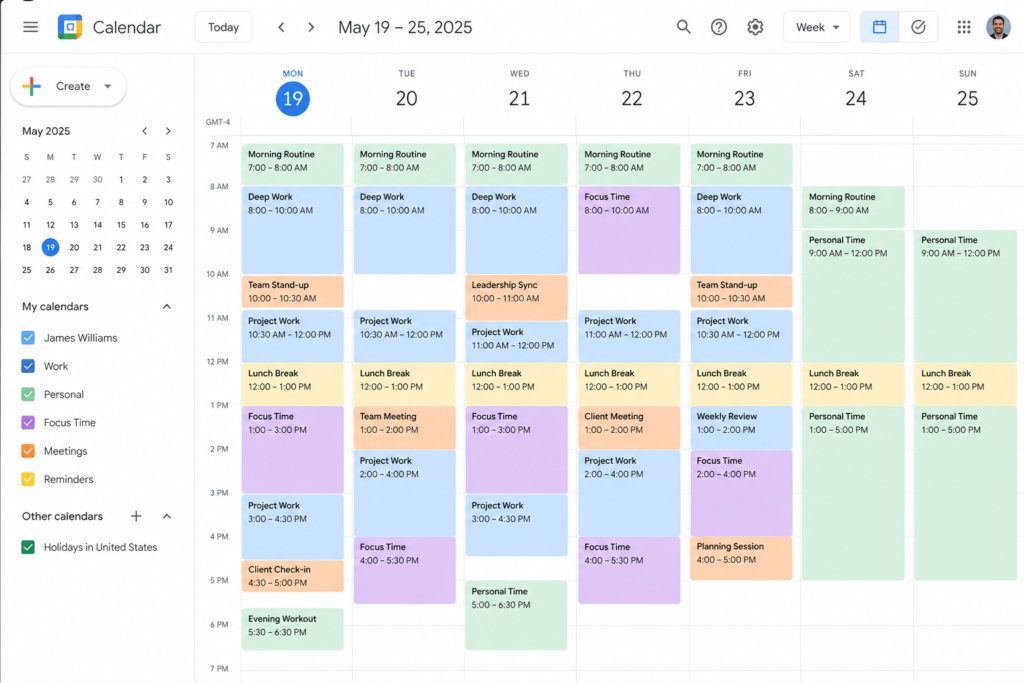
1. Use Time Blocking to Protect Important Work
Time blocking means assigning tasks to specific times on your calendar.
Instead of hoping you’ll “find time,” you create it.
Example:
| Time | Task |
|---|---|
| 8:30–9:00 AM | Email check |
| 9:00–11:00 AM | Deep work project |
| 11:00–11:30 AM | Meetings |
| 1:00–2:00 PM | Admin tasks |
| 2:00–3:30 PM | Creative work |
Why it works:
- Reduces decision fatigue
- Helps manage your time
But effective scheduling also depends on your energy levels—here’s how time vs energy management changes the way you plan your work.
- Protects focus from random tasks
- Builds momentum
If meetings eat your day, block focus time first, then let meetings fight over leftovers.
2. Try the Pomodoro Technique for Work
If long sessions feel painful, use short sprints.
The Pomodoro technique for work usually means:
- 25 minutes focused work
- 5-minute break
- Repeat 4 times
- Take a longer break
Some professionals prefer 50/10 cycles instead.
Work for 25 minutes, then take a 5-minute break. That creates a simple 30-minute productivity cycle.
Best for:
- Easily distracted workers
- Starting boring tasks
- Preventing burnout
- Building consistency
Apps that help: Focus To-Do, Focus Booster, Forest.
3. Remove Distractions Before They Start
Willpower is overrated. Environment wins.
And once distractions are reduced, the next step is making sure you’re working on the right things—these time prioritization techniques help you focus on what actually matters.
If you want to stay focused at work without distractions:
- Put your phone out of reach
- Turn off non-essential notifications
- Close unused tabs
- Use website blockers like Freedom or Cold Turkey
- Wear headphones as a visual “do not disturb” sign
In noisy offices, noise-cancelling headphones such as the Sony WH-1000XM5 can be a lifesaver.
I once gained an extra hour of focus daily by simply logging out of social media. Dramatic? Yes. Effective? Also yes.
4. Start With the Smallest Possible Step
Procrastination often looks like laziness, but it is usually overwhelm wearing sunglasses.
To stop procrastinating and actually get started:
- Open the file
- Write one sentence
- Work for five minutes
- Make an ugly first draft
Action creates motivation more often than motivation creates action.
Tell yourself: “I only need to begin.” That trick works suspiciously well.
5. Use Energy Management, Not Just Time Management
If you’re tired, focus becomes expensive.
To stay focused at work when tired:
- Get sunlight early in the day
- Drink water
- Eat lighter lunches
- Take walking breaks
- Do hard tasks during peak energy hours
- Keep sleep consistent
Many people think they need more discipline when they really need more sleep.
| Low Energy Habit | Better Alternative |
|---|---|
| Heavy lunch | Balanced meal |
| Sitting 4 hours straight | 5-minute walk break |
| Late caffeine overload | Morning caffeine only |
| Random work order | Hard tasks first |
6. Calm Stress to Sharpen Attention
Stress scatters attention. Calm gathers it.
If you’re wondering how to stay focused at work when stressed, try a 2-minute reset:
- Inhale for 4 seconds
- Exhale for 6 seconds
- Repeat 10 rounds
Short mindfulness sessions can help many workers reduce mental clutter.
Apps like Headspace and Calm offer quick guided sessions between meetings.
Inhale for 4 seconds, then exhale for 6 seconds. One full breathing cycle takes 10 seconds.
No incense required.
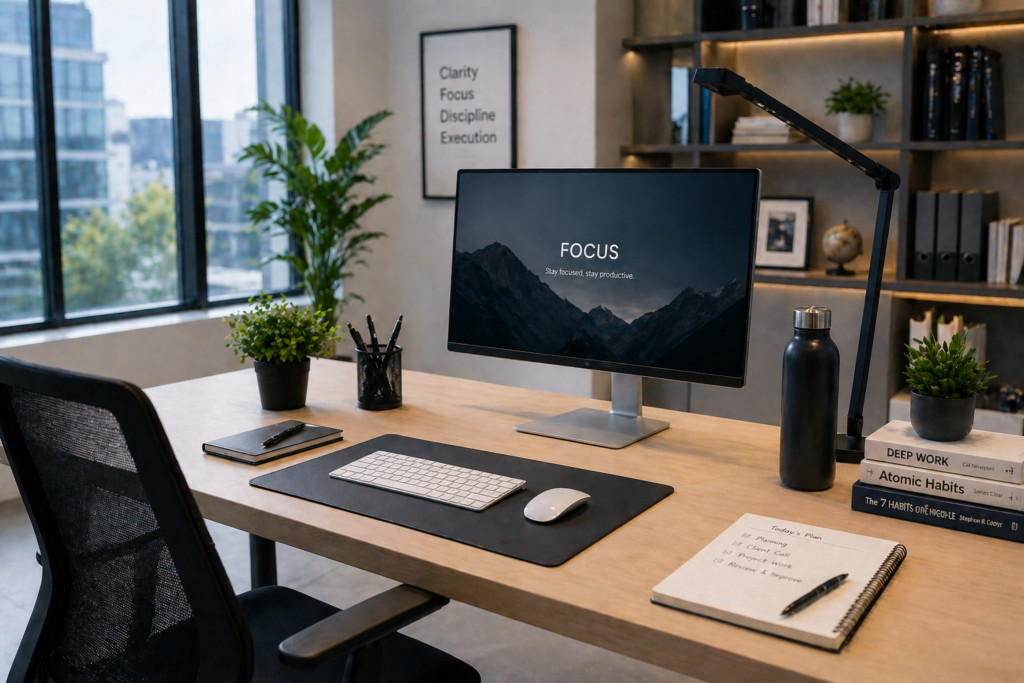
7. Design a Focus-Friendly Workspace
Your desk can either help you think or look like a yard sale.
To boost productivity at work:
- Keep only current-task items visible
- Use a supportive chair
- Raise monitor to eye level
- Improve lighting
- Keep water nearby
- Use a clean note system
Helpful tools include the Logitech MX Keys keyboard, standing desk converters, and dual monitors.
How to Stay Focused at Work When Working From Home
Remote work adds unique distractions: laundry, snacks, doorbells, pets with opinions.
Use these rules:
- Start at the same time daily
- Create a dedicated workspace
- Dress for work mode
- Use clear boundaries with family
- Take real lunch breaks
- End work with a shutdown routine
A small ritual tells your brain, “We are now open for business.”
How Long Should Focused Work Sessions Last?
There is no magic number.
Use this guide:
| Work Type | Ideal Session |
|---|---|
| Admin tasks | 25 minutes |
| Writing | 45–90 minutes |
| Analysis | 50–75 minutes |
| Creative thinking | 60–120 minutes |
Test different lengths. Your brain is unique, so test different session lengths and keep what works best for you.
Best Tools That Help You Stay Focused at Work
- Freedom – blocks distracting apps/sites
- RescueTime – tracks habits
- Todoist – task capture
- Notion – projects and notes
- Forest – phone focus game
- Clockify – time tracking
- Bose QuietComfort 45 – office noise control
Use tools as support systems, not productivity costumes.
Quick FAQ
How can I stay focused at work when I’m easily distracted?
Remove triggers first: silence notifications, use timers, keep one task open.
Can meditation really help me focus at work?
Yes, short mindfulness breaks can improve attention and stress control for many people.
How do I protect my focus from meetings and emails?
Batch emails 2–3 times daily and schedule deep-work blocks before meetings fill your calendar.
How can I stay focused at work with ADHD?
Use shorter timers, visual task lists, body doubling, and reduced distractions. Professional medical support can also help.
How can I stay focused at work all day?
Don’t try to. Focus in waves. Alternate intense work with recovery breaks.
Conclusion
Learning how to stay focused at work is less about becoming a robot and more about building smart habits. Protect your time, reduce distractions, manage energy, calm stress, and create a workspace that helps you think.
Start with just one technique today. Maybe time blocking. Maybe Pomodoro. Maybe putting your phone in witness protection.
Small changes, repeated often, create serious productivity.
Which focus technique will you try first?