

Introduction: Why Your Calendar Isn’t the Problem
You wake up. You check your calendar. It’s full.
Meetings. Deadlines. Tasks stacked like a game of Jenga.
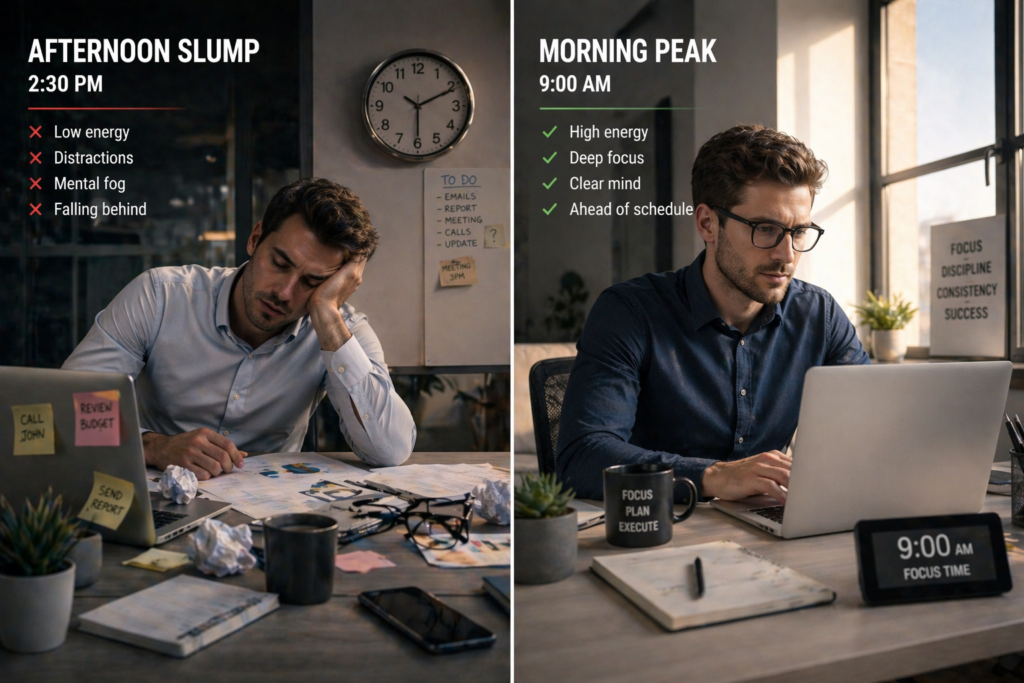
Yet… by 2 PM, your brain feels like mashed potatoes.
Sound familiar?
Here’s the uncomfortable truth: you don’t have a time problem—you have an energy problem.
For years, we’ve been told to master time management. Block your hours. Optimize your schedule. Wake up at 5 AM (because apparently that solves everything).
But what if the real game-changer isn’t how you manage your time… but how you manage your energy?
Welcome to the debate of time vs energy management—and why it might completely change how you work.
What Is the Difference Between Time Management and Energy Management?
Let’s keep this simple.
Time management vs energy management comes down to this:
| Aspect | Time Management | Energy Management |
|---|---|---|
| Focus | Hours and schedules | Physical, mental, emotional energy |
| Goal | Efficiency | Sustainability + performance |
| Approach | Task prioritization | Energy alignment |
| Outcome | More tasks done | Better work done |
In short:
- Time management asks: “What should I do next?”
- Energy management asks: “Do I even have the energy to do this well?”
And that question changes everything.
Why Energy Management Often Beats Time Management
Let me paint you a picture.
You schedule “deep work” at 4 PM because your calendar is free.
But your brain? Already clocked out.
That’s where energy-based productivity wins.
Here’s why energy management is better than time management:
- Higher focus: You work with your brain, not against it
- Better quality: Fewer mistakes, deeper thinking
- Less burnout: You stop forcing productivity when you’re drained
- Consistency: You can actually sustain performance
Time management is like organizing a car.
Energy management is making sure the car has fuel.
One without the other? You’re not going far.
The Real Question: Which Should You Prioritize?
Let’s not overcomplicate this.
You need both—but energy management should come first.
Why?
Because:
A perfectly planned day means nothing if you’re too exhausted to execute it.
Think of it like this:
- Energy = capacity
- Time = container
Without capacity, the container is useless.
So if you’re choosing between the two?
👉 Prioritize energy-based work scheduling.
Then use time management to support it.
How to Combine Time and Energy Management Effectively
This is where things get practical.
You don’t need to abandon your calendar—you just need to upgrade how you use it.
Step-by-step system:
1. Track Your Energy (For 1 Week)
Every 2–3 hours, rate your energy from 1–8.
Patterns will appear quickly.
This becomes even more powerful when combined with a simple system—here’s how to build a planning system that connects your energy, tasks, and long-term goals.
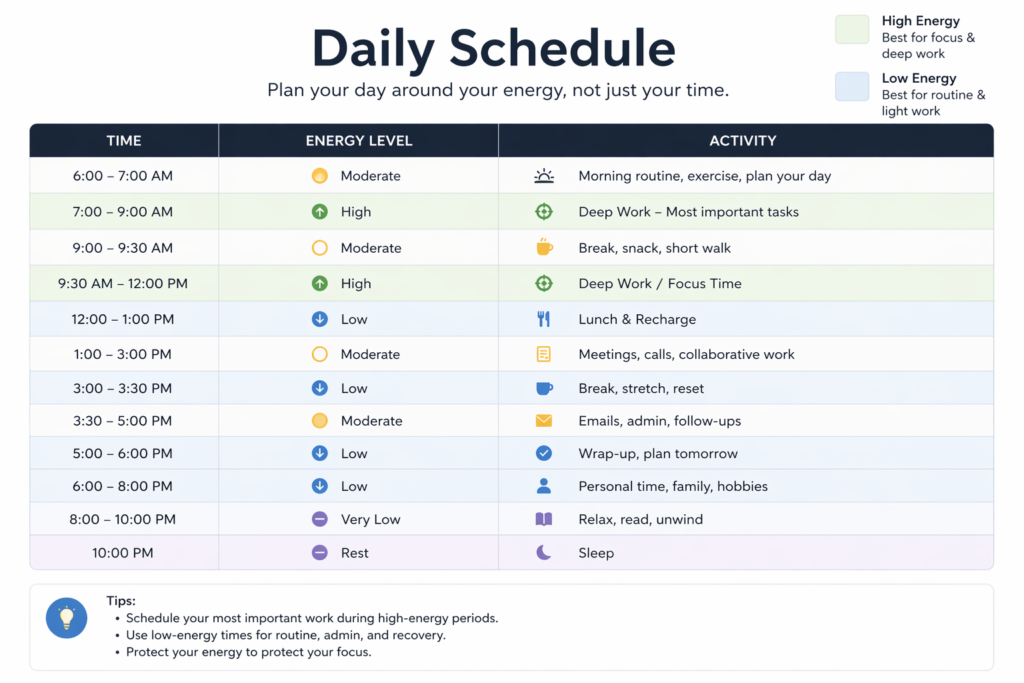
2. Identify Your Peak Energy Hours
Most people fall into:
- Morning peak (8 AM – 12 PM)
- Afternoon slump (1 PM – 4 PM)
- Light rebound (5 PM – 7 PM)
3. Match Tasks to Energy Levels
| Energy Level | Best Tasks |
|---|---|
| High | Deep work, strategy, creative thinking |
| Medium | Meetings, collaboration |
| Low | Emails, admin, routine tasks |
4. Protect Your Energy
- Take real breaks (not scrolling breaks)
- Eat properly
- Sleep like it matters (because it does)
This is energy-wise time management in action.
Benefits of Energy Management (That No One Talks About Enough)
Sure, productivity improves. But that’s just the surface.
The deeper benefits:
- You feel less guilty about rest
- Your work feels easier (yes, really)
- You stop relying on motivation
- Your creativity improves
- Your work-life balance actually exists
This is why energy management vs time management for productivity is becoming such a big conversation—especially for busy professionals.
Can Energy Management Prevent Burnout?
Short answer: Yes. Big time.
Burnout doesn’t come from doing too much.
It comes from doing too much without recovery.
Energy management forces you to:
- Respect limits
- Schedule recovery
- Stop glorifying exhaustion
Which is exactly what prevents burnout in the first place.
Real-Life Example: Two Professionals, Same Schedule
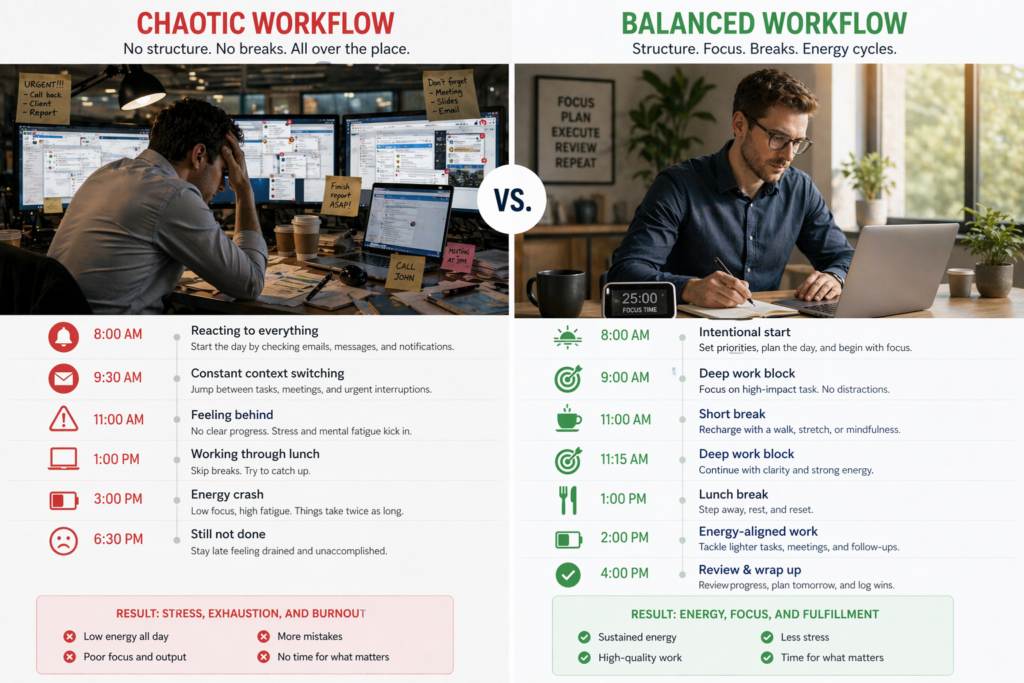
Let’s compare.
| Person A (Time-Focused) | Person B (Energy-Focused) |
|---|---|
| Works 8 straight hours | Works in energy cycles |
| Pushes through fatigue | Takes strategic breaks |
| Schedules randomly | Aligns tasks with energy |
| Feels drained | Feels in control |
Guess who produces better work?
Exactly.
Tools That Help You Manage Time and Energy
Here are some practical tools busy professionals actually use:
- Notion – for planning and energy tracking
- Google Calendar – for time blocking
- Todoist – for tagging tasks by energy level
- Toggl Track – to see where your time (and energy) goes
- Calm / Headspace – for mental recovery
- Oura Ring / Whoop – for tracking sleep and readiness
These tools bridge the gap between theory and real life.
Common Mistakes in Time vs Energy Management
Let’s call these out.
1. Treating all hours equally
Not all hours are created equal. Your 9 AM brain ≠ your 3 PM brain.
2. Ignoring recovery
Rest isn’t laziness. It’s fuel.
3. Over-scheduling
A packed calendar kills flexibility—and energy.
4. Chasing productivity hacks
You don’t need another app. You need awareness.
Many people stay busy without real progress—here’s how to stop being busy and focus on what actually matters.
FAQs: Time vs Energy Management
What is the difference between time management and energy management?
Time management organizes your schedule; energy management aligns work with your energy for better performance.
Which is more important: time management or energy management?
Energy management is often more impactful because it determines how well you execute tasks.
Why is energy management better than time management?
Because it improves focus, quality, and sustainability—not just efficiency.
How do I combine time and energy management effectively?
Track energy patterns, schedule high-value work during peaks, and use time blocks to structure your day.
What are the main benefits of energy management?
Better focus, reduced burnout, improved wellbeing, and consistent high-quality work.
Can energy management help prevent burnout?
Yes. It ensures recovery and prevents chronic fatigue.
How do I track my energy levels through the day?
Use a simple 1–8 scale every few hours and review patterns weekly.
What tasks are suited for high-energy vs low-energy periods?
High-energy: creative and strategic work. Low-energy: admin and routine tasks.
Is time management obsolete?
No. It’s still essential—it just needs energy awareness.
How can I start as a busy professional?
Start small: identify peak hours and schedule 2–3 hours of deep work there.
Final Thoughts: Work Smarter, Not Just Longer
If you remember one thing from this article, let it be this:
Your energy—not your time—is your most valuable resource.
Time is fixed.
Energy is flexible.
And once you learn to manage it?
Everything changes.
Call to Action
Try this tomorrow:
- Notice when you feel most alert
- Schedule your hardest task in that window
- Protect your breaks like meetings
Do that for one week.
You won’t just get more done.
You’ll feel better doing it.
And honestly? That’s the real win.