

Introduction: When Work Feels Like Too Much
Picture this: it’s 9:12 AM. Your inbox is full, meetings are stacking up, and your to-do list is already out of control. You haven’t even finished your coffee, but your mind is racing.
That’s modern work life—fast, demanding, and always on. And before you realize it, stress becomes your normal.
I’ve been there. Busy all day, yet somehow getting nowhere.
Here’s the shift: learning how to manage stress at work isn’t optional anymore—it’s essential.
In this guide, I’ll show you simple, practical techniques you can use anytime—even on your busiest days.
What Is Work Stress (And Why It Hits So Hard)?
Work stress management starts with understanding what you’re dealing with.
Work stress happens when job demands exceed your ability to cope. Deadlines, meetings, emails, expectations—it all stacks up.
Common causes include:
- Tight deadlines
- Long hours
- Poor work-life balance
- Lack of control over tasks
- Constant notifications (yes, those too)

Quick Stress Relief Techniques You Can Use Immediately
What are the quickest work stress management techniques for immediate relief?
Here’s the truth: when stress spikes, you don’t have time for a 30-minute routine.
Try these instead:
- Box breathing (1 minute)
- Stand and stretch (2 minutes)
- Look away from screens (20 seconds)
- Drink water slowly
- Name 5 things you can see (grounding technique)
These are small—but surprisingly powerful.
1. Breathing Exercises That Actually Work During Meetings
How does deep breathing reduce stress during meetings?
Deep breathing calms your nervous system. It tells your body: “Hey, we’re safe.” That lowers heart rate and reduces anxiety.
Try this simple method:
- Inhale for 4 seconds
- Hold for 4 seconds
- Exhale for 4 seconds
- Hold again for 4 seconds

Can progressive muscle relaxation be done at a desk?
Yes, and it’s easier than you think.
Here’s a quick version:
- Clench your fists for 5 seconds
- Release slowly
- Tighten shoulders, then relax
- Press feet into the floor, then release
This technique helps release hidden tension you didn’t even realize you were holding.
3. Mindfulness at Work (Without Sitting Cross-Legged)
How does mindfulness meditation improve focus under work pressure?
Mindfulness isn’t about emptying your mind—it’s about noticing what’s happening right now.
When you practice mindfulness at your desk:
- You reduce mental clutter
- You improve focus
- You respond instead of react
Try this:
- Focus on your breath for 60 seconds
- Notice sounds without judging them
- Bring attention back when your mind wanders
Apps like Calm or Headspace can guide you in short sessions.
4. The Power of Micro-Breaks (Tiny Breaks, Big Impact)
Ever feel guilty stepping away for 5 minutes? Don’t.
Micro-breaks = productivity boost.
These small resets work best when they become routine—here are 10 small daily habits to improve your life and lower stress naturally.
Take breaks like:
- 5 minutes every hour
- Walk around
- Stretch your neck
- Look outside
| Break Type | Duration | Benefit |
|---|---|---|
| Eye break | 20 sec | Reduces eye strain |
| Walk | 5 min | Boosts energy |
| Stretch | 2 min | Relieves tension |
5. Time Management: Your Secret Weapon Against Stress
What role does time management play in stress reduction at work?
Poor time management = constant panic mode.
Better time management = control.
If you constantly feel overloaded, these time prioritization techniques for busy professionals can help you focus on what matters most.
Try these:
- The 2-minute rule (do small tasks immediately)
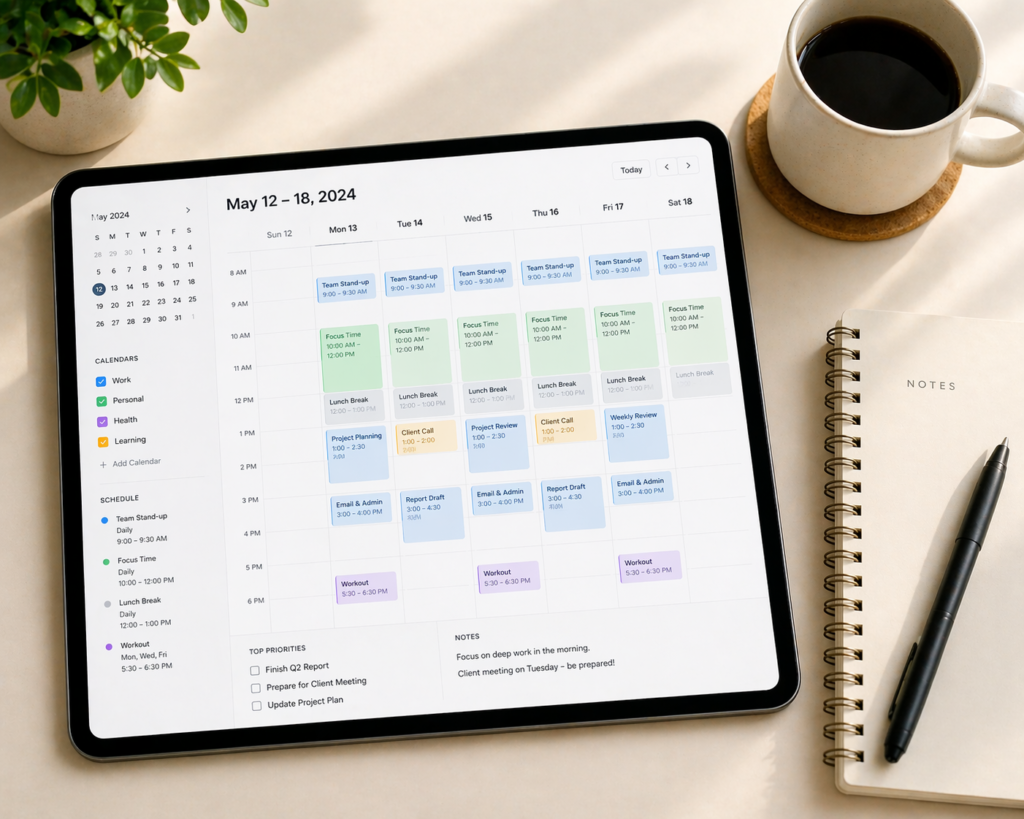
- Time blocking (schedule your work)
- Prioritize top 3 tasks daily
6. Setting Boundaries Without Feeling Guilty
What’s the best way to set work-life boundaries to manage stress?
This is hard—but necessary.
Start small:
- Don’t check emails after work hours
- Say “I’ll handle this tomorrow”
- Block personal time on your calendar
Boundaries don’t make you lazy. They make you sustainable.
7. Exercise and Stress: How Much Is Enough?
How much exercise per week helps with work-related stress?
Experts recommend:
- 150 minutes of moderate exercise per week
That’s just 30 minutes, 5 days a week.
Even walking counts.
Recognizing Burnout Early (Before It Gets Serious)
How to recognize burnout from chronic work stress early?
Watch for signs like:
- Constant fatigue
- Lack of motivation
- Irritability
- Trouble concentrating
If you feel this way often, don’t ignore it.
Should You Talk to Your Boss About Stress?
Should I talk to my boss about stress management support?
Short answer: yes—if you feel safe doing so.
You can say:
- “I’m feeling overwhelmed with current workload”
- “Can we prioritize tasks together?”
Most managers prefer honesty over burnout.
Helpful Tools and Products for Workplace Stress Relief
Here are some tools professionals are using today:
| Product | Benefit |
| Muse Headband | Tracks meditation progress |
| Calm App | Guided stress relief sessions |
| Noise-Cancelling Headphones | Reduce distractions |
| Fitbit Charge 6 | Tracks stress levels |
| Ergonomic Foot Rest | Reduces physical strain |
These aren’t magic—but they can help.
And remember—tools help, but your habits, focus, and energy management matter even more long term.
Bonus Techniques You Might Not Have Tried Yet
Let’s get a bit creative:
- Vagus nerve stimulation (cold water, humming)
- Gratitude journaling after work
- Aromatherapy (lavender oil)
- Fidget tools for focus
Sometimes the smallest habits make the biggest difference.
Conclusion: You Don’t Have to Stay Stressed
Here’s the thing: work stress isn’t going away anytime soon.
But how you handle it? That’s something you can control.
Start small. Try one technique today. Maybe it’s breathing. Maybe it’s a 5-minute walk.
You don’t need perfection—you just need progress.
And hey, if your coffee goes cold again… maybe that’s your sign to take a break.
Now it’s your turn: Which technique are you going to try first?