

Introduction
Professionals in 2026 are drawn in all directions by their jobs and personal lives. It’s simple to feel overburdened by demanding jobs, flexible work schedules, personal commitments, and never-ending notifications. Nowadays, maintaining organization is more than just being tidy; it’s how you continue to be productive. Because of this, a planning system has evolved from being optional to being necessary for actual, long-term success.
There is more to a planning system than just productivity. It is a methodical approach to converting objectives into everyday activities. In contrast to disjointed apps or disorganized to-do lists, a planning system links your current actions with your long-term goals.
Building and utilizing a reliable structure to assist busy professionals in achieving clarity, focus, and consistent outcomes in 2026 is the main idea of this guide.
What Is a Planning System?
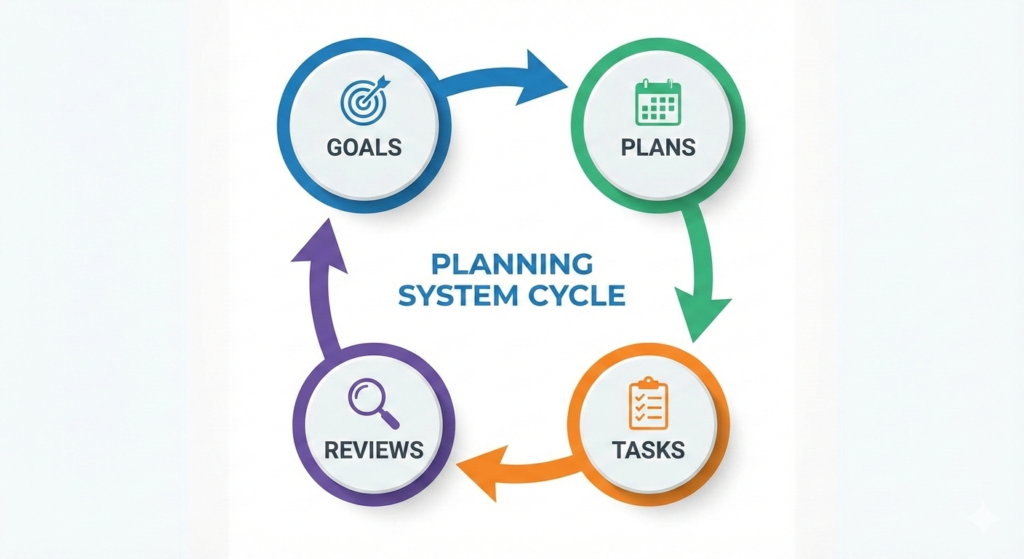
A planning system is a repeatable process that individuals or teams use to plan, organize, execute, review, and improve their work over time. It combines tools, habits, and frameworks into one cohesive approach to decision-making and productivity.
At its core, this approach answers five questions:
- What do I want to achieve?
- What matters most right now?
- What actions should I take today, this week, and this month?
- How will I track progress and adjust?
- How do I ensure consistency without burnout?
Key Characteristics of an Effective Planning System
- Structured but flexible: Provides guidance without rigidity
- Goal-driven: Aligns daily actions with long-term goals
- Time-aware: Accounts for limited time and energy
- Review-based: Encourages reflection and optimization
- Scalable: Grows with your responsibilities
Why Busy Professionals Need a Planning System in 2026
The professional landscape in 2026 is fundamentally different from a decade ago. AI tools, constant notifications, and global competition have increased both opportunity and pressure. Without a planning system, many professionals experience:
- Decision fatigue
- Chronic overwhelm
- Missed deadlines
- Reactive workdays
- Poor work-life balance
A well-designed framework helps you shift from reactive to intentional work.
Key Benefits of Using a Planning System
- Clarity – You always know what to work on next
- Focus – Less multitasking, more deep work
- Consistency – Progress even on busy weeks
- Stress reduction – Fewer last-minute scrambles
- Better results – Improved performance and career growth

Planning System vs To-Do Lists: What’s the Difference?
Many professionals assume that a to-do list is a planning system. In reality, a to-do list is just one component.
| To-Do List | Planning System |
|---|---|
| Focuses on tasks | Focuses on outcomes |
| Short-term | Short + long-term |
| Often reactive | Proactive and intentional |
| No review process | Built-in reviews |
| Easy to abandon | Designed for consistency |
A planning system integrates to-do lists into a broader framework that includes goals, schedules, priorities, and reviews.
Core Components of a Modern Planning System (2026)
1. Goal Setting Framework
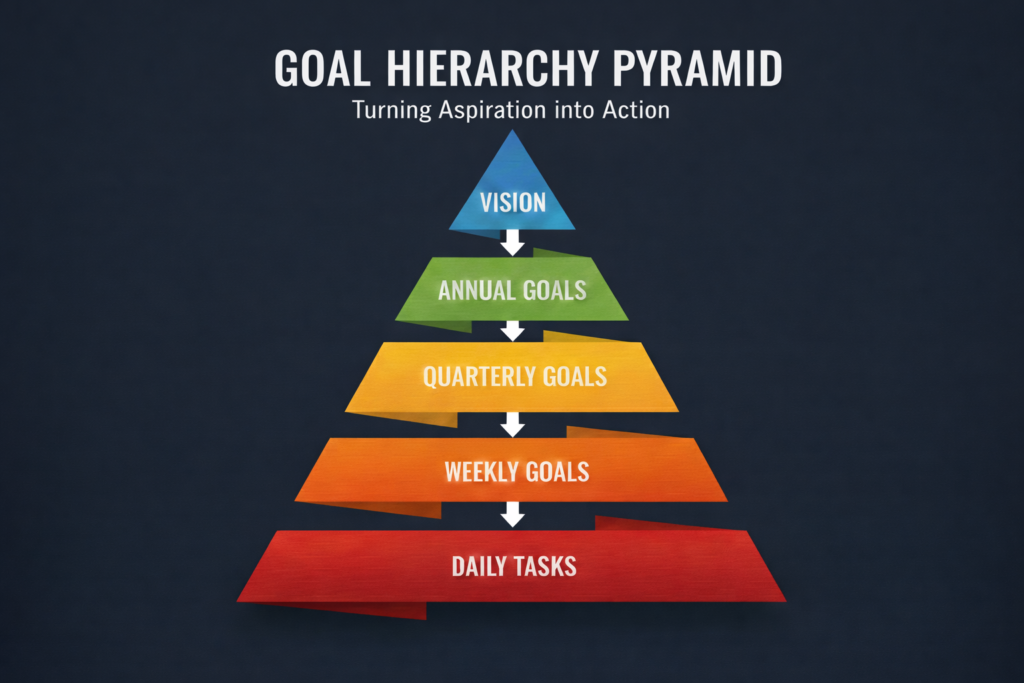
Goals give your planning system direction. In 2026, effective professionals focus on outcome-based goals rather than vague intentions.
Examples:
- Increase client retention by 15% in 12 months
- Complete a professional certification by Q3
- Reduce weekly work hours from 55 to 45
2. Strategic Planning
Strategic planning translates goals into actionable plans. This typically happens on a quarterly or monthly basis.
Key questions include:
- What projects move me closer to my goals?
- What can I eliminate or delegate?
- What constraints should I plan around?
This step prevents overcommitment—a common problem among busy professionals.
3. Task Management
Task management is where daily execution happens. In an effective planning system:
- Tasks are clearly defined
- Each task has a purpose
- Tasks are realistically scheduled
- Priorities are visible
Popular approaches include time-blocking, priority matrices, and energy-based planning.
4. Time Management and Scheduling
Time is the most limited resource for professionals. A planning system helps you:
- Allocate time intentionally
- Protect deep work sessions
- Balance meetings and focused work
- Align tasks with energy levels
Rather than filling every hour, modern planning systems emphasize white space for thinking and recovery.
5. Review and Reflection
The review process is what separates a planning system from static tools. Weekly and monthly reviews allow you to:
- Track progress
- Identify bottlenecks
- Adjust priorities
- Learn from mistakes
In 2026, high performers treat reviews as non-negotiable appointments.
Types of Planning Approaches
Not all planning systems look the same. The best one depends on your role, personality, and workload.
1. Analog Methods
These include:
- Paper planners
- Bullet journals
- Whiteboards
Pros:
- Reduced digital distractions
- Strong cognitive engagement
Cons:
- Limited automation
- Harder to scale
2. Digital Methods
Digital systems use apps and cloud-based tools.
Common features:
- Task reminders
- Calendar integration
- Collaboration tools
- AI-assisted planning
Pros:
- Flexible and powerful
- Easy updates and tracking
Cons:
- App overload risk
3. Hybrid Methods
In 2026, many professionals use a hybrid approach—digital tools for scheduling and analog methods for thinking and reflection.
This combination often provides the best balance of clarity and flexibility.
How to Build a Simple Planning Structure
Step 1: Define Your Priorities
Start by identifying 3–5 core priorities for the year. These act as filters for all planning decisions.
Step 2: Choose Your Tools
Select tools that match your workflow. Simplicity beats complexity.
Examples:
- One calendar
- One task manager
- One place for notes
Step 3: Create a Weekly Planning Ritual
Every week:
- Review last week
- Plan the upcoming week
- Schedule priorities first
Consistency matters more than perfection.
Step 4: Schedule Daily Focus Time
Busy professionals need protected focus time. Even 60–90 minutes a day can dramatically improve results.
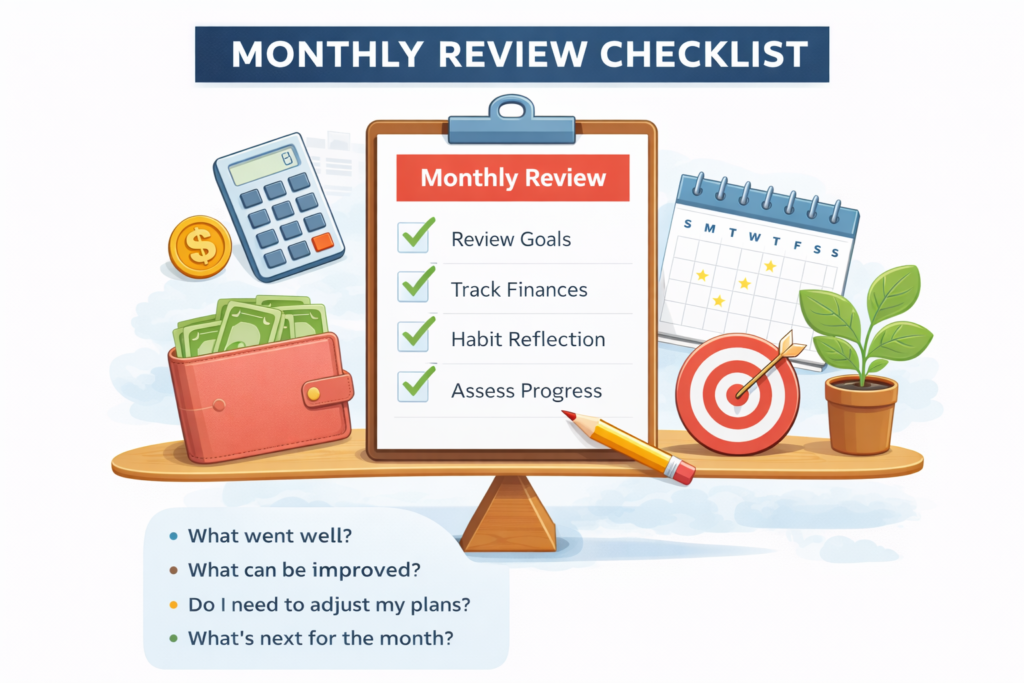
Step 5: Review and Refine Monthly
Your structure should evolve as your responsibilities change. Monthly reviews keep it relevant.
Common Mistakes to Avoid
Even the best systems fail when misused. Watch out for:
- Overplanning without execution
- Using too many tools
- Ignoring reviews
- Unrealistic schedules
- Copying systems that don’t fit your lifestyle
A setup should support your life—not control it.
Planning and Work-Life Balance
A powerful but often overlooked benefit of planning systems is improved work-life balance.
By clearly defining priorities and boundaries, professionals can:
- End workdays with confidence
- Reduce mental clutter
- Make time for health and relationships
- Avoid burnout
In 2026, sustainable success is impossible without intentional planning.
The Role of AI in Planning Systems (2026)
AI has become a supportive layer in modern planning by:
- Suggest task priorities
- Analyze workload patterns
- Automate scheduling
- Provide insights during reviews
Technology improves efficiency, but human judgment gives direction.
Real-World Example
Consider a project manager working in a hybrid environment:
- Annual goals set in January
- Quarterly planning sessions
- Weekly reviews every Sunday evening
- Daily top 3 priorities
- Digital calendar + paper notebook
This structure creates order without rigidity.
How to Measure the Success of Your Planning System
Your approach works if it helps you:
- Achieve goals consistently
- Reduce stress
- Make better decisions
- Maintain energy and motivation
If it doesn’t, it’s time to simplify or redesign.
Common Questions and Answers
What is a planning system, to put it simply?
An organized method for determining what needs to be done, when, and how to monitor progress.
What is the duration required to construct a planning system?
In one to two weeks, the majority of professionals can develop a rudimentary planning system and make improvements over time.
Is it possible for one planning system to handle life and work?
Yes, provided that it clearly integrates priorities from both personal and work life.
Conclusion: Why It Is More Important Than Ever
Building a solid planning structure is now a vital life and professional skill.
A clear planning system offers direction, stability, and clarity in a world that is always changing. In 2026, it will mean the difference between ongoing overwhelm and deliberate advancement for working professionals.
You can take charge of your time, match actions to objectives, and make room for both personal and professional success by developing and implementing a structured approach.
To make this system actually work in your daily life, start with this guide on how to prioritize, focus, and get meaningful work done—even on busy days.